
How Rising Living Costs Are Changing the Way Americans Spend and Save

Over the past few years, American households have navigated a shift in their everyday finances. Persistent inflation, high borrowing costs, and elevated shelter expenses have reshaped the traditional consumer playbook. While wage growth has provided relief for some sectors, essential expenses continue to absorb a larger percentage of monthly take-home pay.
As a result, consumer behavior in the United States is undergoing a quiet structural shift. Rather than relying on rigid budgets or simple spending freezes, households are adopting dynamic, value-focused strategies to manage their finances. Understanding these shifts offers valuable insight into how Americans are adapting to sustained economic pressure while striving to maintain financial stability.
Why Living Costs Are Rising for Many Americans
The trajectory of household expenses stems from a combination of macroeconomic drivers, supply chain realignments, and persistent sector-specific demand:
-
Sustained Inflation: Even as headline inflation metrics moderate, the compounding effect of multi-year price increases leaves everyday goods significantly more expensive than pre-2020 baselines.
-
Elevated Borrowing Rates: High interest rates implemented to curb inflation have raised the cost of carrying consumer debt, including credit card balances, auto loans, and mortgages.
-
Structural Supply Pressures: Insurance premiums, regional housing shortages, and utility infrastructure upgrades continue to push baseline operational costs higher for homeowners and renters alike.
Together, these drivers create a compounding effect where essential monthly commitments require a larger portion of household earnings, leaving less flexibility for savings and discretionary choices.
How Higher Housing Costs Are Changing Household Budgets
Housing remains the largest single expense for most American families, and recent upward trends in both mortgage rates and rent prices have forced significant adjustments.
The Renter’s Challenge
Renters face persistent affordability constraints as property management costs, property taxes, and regional demand maintain upward pressure on lease renewals. To stay afloat, many tenants are choosing smaller floor plans, taking on roommates, or relocating to suburban and exurban areas where price per square foot is lower.
The Homeowner’s Friction
Homeowners who secured fixed mortgage rates under 4% benefit from predictable principal and interest payments, but they are not entirely insulated. Sharp rises in home insurance premiums, local property tax assessments, and home maintenance services have increased the total cost of homeownership. Meanwhile, prospective buyers face a tight market characterized by elevated home prices and high mortgage interest rates, prompting many to delay purchasing plans.
Food and Grocery Spending Is Becoming More Strategic
Food costs—both for home consumption and dining out—have proven particularly sensitive to labor and supply chain changes. In response, shoppers are altering how they navigate the grocery store.
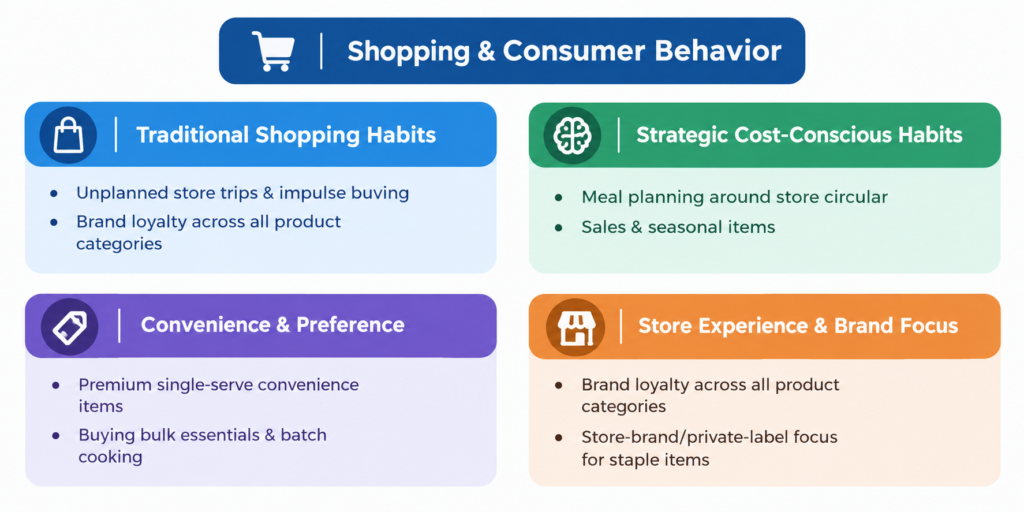
Rather than cutting back on food quantities, consumers are switching to private-label alternatives, using grocery store loyalty apps, and shifting spending toward discount grocers and wholesale clubs. Dining out has also evolved; many households reserve full-service restaurant visits for special occasions, leaning instead on fast-casual options or home-prepared meals.
Americans Are Rethinking Discretionary Purchases
As essential expenditures take priority, non-essential spending is undergoing strict prioritization.
-
Subscription Audits: Consumers are canceling unused streaming services, gym memberships, and digital apps to eliminate recurring leaks in their monthly cash flow.
-
Travel and Experience Prioritization: While demand for travel remains resilient, travelers are opting for shorter trips, off-peak travel windows, and drive-to destinations rather than long-distance air travel.
-
Apparel and Electronics Delays: Purchases of non-essential consumer goods, high-end electronics, and wardrobe updates are increasingly deferred until promotional discount periods or secondary markets (resale platforms).
The Impact on Emergency Savings and Retirement
The squeeze on net discretionary income directly impacts long-term wealth accumulation and liquidity cushions.
Emergency Reserves Under Pressure
Building a standard three-to-six-month emergency fund has become more difficult. A significant portion of households report drawing down liquid savings to absorb unexpected expenses or temporary budget shortfalls, reducing their overall shock absorber for future financial emergencies.
Strategic Retirement Contributions
While many workers continue participating in employer-sponsored retirement plans like 401(k)s—particularly up to the company match threshold—unfunded voluntary contributions above that match have slowed. Maximizing annual IRA limits has similarly taken a backseat for households managing near-term debt or housing obligations.
How Higher Transportation and Healthcare Costs Affect Families
Beyond housing and food, daily operational costs for transportation and healthcare represent significant line items that require active management.
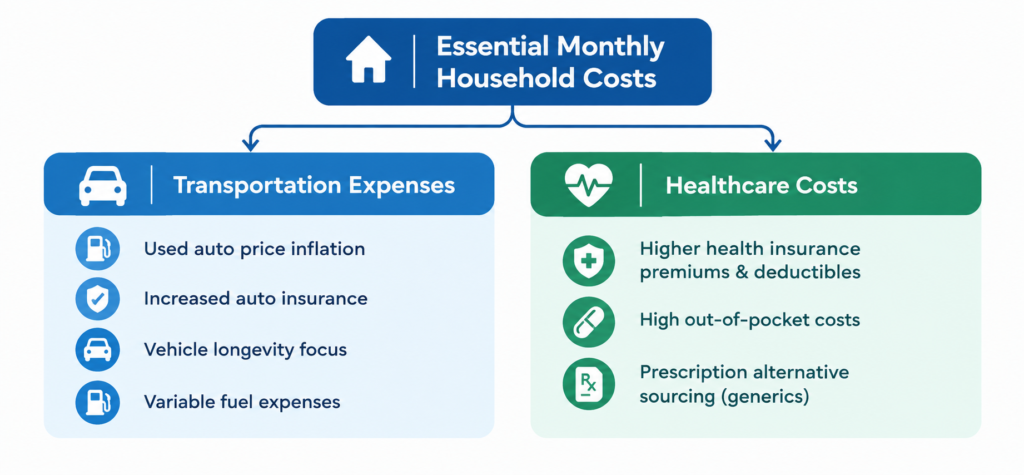
To control transportation budgets, drivers are keeping existing vehicles longer, delaying upgrades, and shopping around for lower auto insurance coverage rates. In healthcare, families are increasingly relying on Health Savings Accounts (HSAs) and Flexible Spending Accounts (FSAs) to manage deductibles using pre-tax dollars, while actively requesting generic pharmaceuticals to limit out-of-pocket expense spikes.
The Growing Importance of Budgeting and Financial Planning
The need to navigate elevated prices has driven renewed interest in structured cash flow management.
-
Zero-Based Budgeting: Allocating every dollar of income to a specific expense, savings goal, or debt payment before the month begins to prevent unallocated spending.
-
Cash-Stuffing and Envelope Systems: Utilizing physical cash or digital sub-accounts to set firm spending limits on variable categories like dining and entertainment.
-
Automated Savings Transfers: Setting up automatic transfers on payday to move money into high-yield savings accounts before it can be spent on discretionary items.
How Different Income Groups Are Responding
The impact of rising living costs varies considerably across economic brackets:
Lower-Income Households
With a larger portion of earnings committed to non-negotiable expenses (rent, food, utilities), lower-income families experience the greatest squeeze. Budget adjustments primarily focus on essential trade-offs, relying on community support programs, and relying more heavily on short-term credit to bridge gaps.
Middle-Income Households
Middle-income families are actively restructuring lifestyle choices. This group exhibits the highest rate of brand-switching, subscription cancellations, and deferred major purchases, leveraging flexibility to preserve core financial stability.
Higher-Income Households
Higher-earning households generally possess sufficient cash-flow buffers to absorb price increases without drastic lifestyle changes. However, many are adjusting asset allocation strategies, seeking higher yields on cash reserves, and negotiating better terms on premium services.
What These Spending and Saving Changes Could Mean for the Future
The behavioral shifts observed today may have long-term structural effects on the broader U.S. economy:
-
Sustained Retail Value-Focus: Retailers will likely need to emphasize competitive pricing and value-tier products to maintain customer loyalty.
-
Delayed Life Milestones: High housing and living costs may lead younger generations to postpone homeownership, marriage, and family planning.
-
Evolving Credit Dynamics: A continued reliance on credit cards or Buy Now, Pay Later (BNPL) services to bridge inflation gaps could increase overall household debt burdens over time.
Practical Ways Households Can Adapt
Managing finances through periods of high inflation requires ongoing adjustments. These strategies can help rebuild financial resilience:
-
Audit Household Subscriptions Periodically: Review bank statements every quarter to eliminate forgotten recurring charges.
-
Optimize Cash Holdings: Move emergency reserves from traditional checking accounts into FDIC-insured high-yield savings accounts (HYSAs) to earn competitive interest.
-
Consolidate High-Interest Debt: Explore balance-transfer options or personal consolidation loans to reduce monthly credit card interest burdens.
-
Leverage Cash-Back and Loyalty Programs: Use cashback credit cards responsibly (paying off balances monthly) and leverage store rewards to offset routine grocery and fuel costs.
Rising living costs have fundamentally shifted how American households approach daily spending, debt, and long-term planning. While high prices present real challenges across income levels, the widespread adoption of value-oriented shopping, strategic debt management, and proactive budgeting demonstrates a remarkable degree of consumer adaptability. By focusing on intentional spending and prioritizing financial buffers, households can continue building financial resilience in an evolving economic landscape.
